Crown thinning in Stockwell: practical tree care for homes, gardens, and local businesses
If you’re looking for crown thinning in Stockwell, you’re likely trying to solve a real problem rather than simply improve the look of a tree. Perhaps a mature tree is blocking too much light into a garden flat, branches are rubbing together after a windy season, or dense growth is starting to feel heavy over a pavement, driveway, or shared access route. Crown thinning is a careful, selective pruning service designed to make a tree lighter, healthier-looking, and easier to live with while preserving its natural shape.
In a built-up area like Stockwell, where gardens can be compact, boundaries are close, and trees often sit beside homes, shopfronts, schools, mews properties, and communal spaces, the right pruning approach matters. A thoughtful thinning job can improve airflow, reduce wind resistance, and let in more daylight without leaving the tree stripped or awkwardly reshaped. It’s a skilled service, and when it’s done properly, the results should look balanced, natural, and appropriate for the site.
For local customers, the value is simple: better light, less congestion, and a healthier tree that still looks like a tree. Whether the tree is on a residential boundary, in a back garden, or part of a managed commercial landscape, crown thinning can be one of the most effective ways to manage mature growth with minimal disruption.
What crown thinning means for Stockwell properties

Crown thinning is the selective removal of small, suitable branches throughout the canopy to reduce density while maintaining the tree’s overall height and shape. It is not the same as heavy reduction, topping, or lifting the crown excessively. Instead, the aim is to open up the crown in a controlled way so more light and air can pass through.
For Stockwell property owners, this can make a noticeable difference. Many gardens and frontages in the area have limited space, and dense crowns can create a sense of enclosure, especially where neighbouring buildings are close by. A tree that feels overwhelming in summer may become far more manageable after thinning, all without losing the mature presence that makes trees valuable in the first place.
Done well, the work should be discreet. You should still see a full tree after the service, but with fewer congested branch clusters, better light penetration, and a more even structure. The point is not to radically change the tree; it is to improve how it behaves in its environment.
Why local customers in Stockwell ask for crown thinning
Every site is different, but the reasons people request crown thinning in Stockwell tend to follow familiar patterns. In terrace gardens, a dense canopy can leave a patio dark and damp. In communal areas, tree branches may feel too close to upper windows or shared walkways. On commercial premises, trees that grow thickly can create practical issues around visibility, maintenance, and general presentation.
Another common concern is wind. A full crown can act like a sail, especially during stronger weather. While tree structure and species play a big part, thinning can reduce some of that resistance and help the tree move more naturally in gusts. This does not make a tree storm-proof, of course, but it can be a sensible way to reduce strain where growth has become dense.
There is also the visual aspect. A tree with tightly packed inner growth can look heavy and unkempt, even if it is perfectly healthy. Selective pruning improves the overall appearance without making the tree look over-worked. For homeowners who want Stockwell tree crown thinning that feels subtle rather than drastic, this is often the preferred option.
Benefits of professional crown thinning

Professional crown thinning offers a balance of practical and aesthetic benefits. It is especially useful where a tree needs careful management but the owner still wants to preserve privacy, shade, and the character of the planting. The best results are achieved when the pruning is planned around the tree’s species, age, condition, and setting.
Common benefits include:
- Improved daylight in gardens, ground-floor rooms, and internal spaces
- Better airflow through the canopy, which can support healthier growth conditions
- Reduced wind resistance in dense, mature crowns
- A lighter, more open appearance without major loss of tree presence
- Less rubbing and crowding between branches
- More manageable overhang near roofs, boundaries, and access routes
For local residents, another key benefit is simply peace of mind. Trees are long-term assets, but when growth gets out of hand they can become a source of frustration. Thinning offers a measured way to restore balance. It is often the right choice where customers want relief from density, not a dramatic cut.
It can also be useful where multiple issues overlap. For example, a garden tree may be blocking light, scraping against a fence, and holding too much moisture in the shaded space below. A single, well-planned thinning visit can address all three problems at once.
How crown thinning works
A proper thinning job begins with a look at the tree as a whole. The canopy is assessed for crossing branches, congested clusters, weak attachments, and sections where selective removal would improve structure. The goal is to maintain a natural outline while carefully reducing the density of the crown.
Rather than cutting lots of large limbs, a tree surgeon will usually remove smaller branches from across the crown, concentrating on inner congestion and unsuitable growth. This helps keep the final appearance even and avoids leaving obvious gaps or an unnaturally sparse side. The amount removed depends on the tree, but it is generally kept moderate and appropriate to the species.
In practice, the work should be tidy and measured. Branches are removed with care, cuts are made in the right place, and the tree is left in a condition that supports future growth. That is why customers searching for crown thinning Stockwell should look for a service focused on tree health and quality of finish, not just speed.
What’s included in a crown thinning service

While every job is tailored to the tree and site, a typical crown thinning service for Stockwell customers may include the following:
- Initial assessment of the tree, canopy density, and surrounding constraints
- Discussion of your goals, such as more light, less overhang, or improved airflow
- Selective pruning of suitable branches throughout the crown
- Removal of deadwood or obviously damaged growth where appropriate
- Attention to branch spacing so the tree keeps a natural look
- Clearance of cut material and tidying of the work area afterwards
Some customers also want related work at the same time, such as minor crown lifting, light deadwood removal, or advice on whether the tree needs future maintenance. A good local team will explain what is sensible and what should be left alone.
It is worth remembering that thinning is not about removing as much as possible. The best outcome is usually the one you can see only in the improved feel of the space. The tree should still look like a healthy, established tree when the job is complete.
If you’re comparing service options, ask how the pruning will be approached and whether the work is designed to protect the shape and future health of the tree. That helps you choose a team that understands the difference between careful thinning and over-cutting.
Why Stockwell is a place where careful tree work matters
Stockwell has a varied urban landscape, and that makes tree care more nuanced than in open suburban settings. You may be dealing with narrow streets, limited parking, rear access only, shared gardens, conservation-sensitive surroundings, or mature trees that have adapted over many years to a constrained environment. A local service has to work around these realities every day.
Homes in the area range from period terraces and converted buildings to newer developments and apartment blocks. Each property type presents different challenges. For example, a rear garden tree may only be reachable through a narrow side passage, while a commercial courtyard tree may require careful planning around customers, delivery times, or neighbouring businesses. A team familiar with Stockwell is better placed to work efficiently in these conditions.
That local knowledge also helps with timing. On busy roads and tighter residential streets, access can affect how equipment is brought in, where waste is managed, and how much disruption the visit causes. Choosing a nearby arborist for tree crown thinning in Stockwell can make the whole process smoother from the first visit to the final tidy-up.
Residential crown thinning for gardens, frontages, and shared spaces

Homeowners often ask for crown thinning when a tree begins to dominate the garden or block the light to rooms below. In Stockwell, where outdoor space is often precious, a single tree can have a major effect on how a home feels. A dense crown can reduce the quality of a patio, make lawns struggle in shade, and leave sitting areas feeling damp and enclosed.
For front gardens and boundary trees, thinning can also improve the appearance of a property from the street. It can create a more open, cared-for look without taking away the privacy or greenery that many residents value. If branches are near windows, gutters, or boundary features, selective pruning can help reduce contact and future nuisance.
Shared spaces are another common setting. In communal gardens or access areas, a tree can be part of the overall character of the development while still needing sensible maintenance. Here, the aim is often to improve light and usability for everyone while keeping the tree healthy and attractive. That balance is exactly where crown thinning works well.
Commercial tree care and managed sites
Businesses and property managers in Stockwell also benefit from crown thinning. A dense tree near an entrance, car park, seating area, or external walkway can create practical problems, particularly where first impressions matter. A lighter canopy can help keep the site looking orderly and more inviting.
Commercial customers often need tree work to be scheduled around opening hours, deliveries, staff movement, or tenant access. A local team that understands how to work in busy neighbourhoods can plan with these limitations in mind. That may mean completing work early in the day, breaking the job into manageable stages, or coordinating access to avoid unnecessary disruption.
For landlords and managing agents, the service can also help with routine upkeep. Mature trees in managed settings can become dense over time, and thinning is often one part of a broader maintenance programme. It can be particularly useful where trees are close to buildings and need to remain attractive but under control.
How to prepare for a crown thinning visit
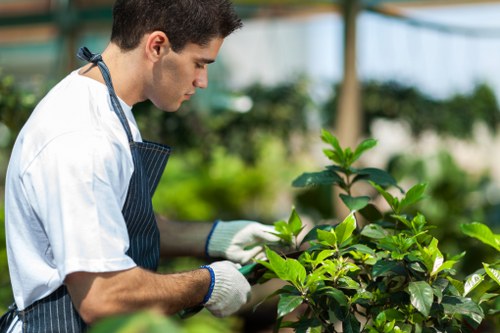
Good preparation helps the work go smoothly and keeps disruption to a minimum. You do not usually need to do much, but a little planning makes a noticeable difference on the day.
Before the visit, it helps to:
- Move vehicles if access to the tree or driveway may be needed
- Clear garden furniture, plant pots, and fragile items away from the work zone
- Unlock gates or side access points if relevant
- Let neighbours know if branches overhang shared boundaries or communal areas
- Point out any concerns such as cables, sheds, greenhouses, conservatories, or fragile fencing
- Share any access restrictions, parking limitations, or building-management requirements
If the tree is near a roof, wall, or commercial frontage, it is also useful to mention that at the enquiry stage. The more the team knows in advance, the better they can plan the work and bring the right equipment. This is one of the main reasons customers often prefer a local specialist for crown thinning in Stockwell.
For larger or more awkward trees, there may be a short site check before the work begins. That is normal and useful, especially in a busy area where practical conditions can change from one property to the next. The aim is to make the work safe, tidy, and suited to the location.
Pricing factors: what affects the cost of crown thinning?
Customers naturally want to know what influences the price of tree work. Exact figures depend on the tree and the site, so it is better to request a quote than to rely on assumptions. Still, it helps to understand the main factors that usually shape the cost of a crown thinning job.
Common pricing factors include:
- Tree size and overall canopy spread
- How dense the crown is and how much selective pruning is needed
- Whether the tree is easy to access or tucked into a tight rear garden
- Parking and loading conditions in the local street
- The amount of waste produced and how it needs to be removed
- Whether extra work is needed, such as deadwood removal or minor crown lifting
Stockwell properties can be straightforward or quite awkward depending on the layout. A small courtyard tree with restricted access may take more planning than a bigger tree in a more open area. That is why a sensible quote should reflect the actual site conditions rather than relying on guesswork.
If you are comparing options, look for clear explanations of what is included. A professional service should be able to tell you what is being done, why it is recommended, and how it suits the tree. Contact us today to request a free quote and discuss the work you need.
Why choose a local company for Stockwell tree thinning?
There are good reasons to choose a local arborist rather than a distant contractor. Tree work in an area like Stockwell is often shaped by access, traffic, neighbours, and the specific character of the property. A local team is more likely to be used to those conditions and to know how to work around them efficiently.
Local experience also matters when it comes to communication. If you need a visit arranged around tenants, residents, or business hours, a nearby service can often be more flexible. That is especially useful where a tree is causing annoyance but not yet at the stage of urgent intervention. With the right approach, the work can be planned neatly and carried out with minimal hassle.
There is also the practical benefit of familiarity with common local tree types and planting patterns. Whether the tree is a lime, plane, sycamore, cherry, oak, or another established species, a knowledgeable tree surgeon should understand how thinning affects its structure and seasonal growth. That helps keep the tree in good condition for the long term.
What to expect on the day
When the team arrives, they should review the tree and confirm the agreed scope of work. After that, the pruning is carried out with care, usually from the crown itself or with access equipment if needed. The focus is on selective branch removal, keeping the tree balanced and reducing unnecessary congestion.
Once the pruning is complete, the site should be left tidy. Branches and cuttings are usually cleared away, and the area around the tree is checked for any missed debris. In a residential setting, that might mean sweeping a path or patio; in a commercial setting, it may mean making sure entrances and shared routes are left presentable.
If further work would be useful in future, you may be advised on timing and next steps. For example, some trees benefit from periodic light maintenance rather than occasional heavy cutting. That kind of advice can help you keep the tree healthy and avoid bigger problems later.
Areas covered around Stockwell
Customers often ask whether a local tree service can cover nearby neighbourhoods as well as Stockwell itself. In many cases, the answer is yes, and that is useful if you manage more than one property or have branches affecting neighbouring locations. Depending on the team and the job, nearby areas may include surrounding parts of South London and adjacent residential streets and business zones.
For local clients, this matters because tree work often involves more than one boundary or more than one set of access conditions. A tree near one property may also affect the next door neighbour, a rear lane, or a shared garden space. A flexible local service can take a practical view of the wider site rather than only the single tree in question.
If you are not sure whether your location is covered, the simplest step is to ask when requesting a quote. Mention the tree location, access issues, and any urgency, and the team can advise whether crown thinning is the right service for your situation.
FAQs about crown thinning in Stockwell
Is crown thinning the same as crown reduction?
No. Crown thinning removes selected smaller branches throughout the canopy to reduce density, while crown reduction reduces the overall size of the tree more noticeably. If your main concern is light and airflow rather than height or spread, thinning may be the better option.
Will crown thinning damage my tree?
When carried out properly and at a sensible level, thinning is a standard tree care practice designed to support the tree and improve its structure. Problems usually arise when the work is too heavy, poorly planned, or not suited to the species. That is why careful assessment matters.
How often does a tree need thinning?
There is no universal schedule. Some trees need attention only occasionally, while others in busy urban settings may benefit from periodic maintenance. Factors such as species, growth rate, exposure, and how close the tree is to buildings all play a part.
Can thinning help if my garden feels too shaded?
Yes, in many cases it can. Selectively opening up the crown can let more daylight through, especially in the lower and middle sections of the canopy. If shade is severe, though, a full assessment may be needed to decide whether thinning alone is enough.
Will the tree still look natural afterwards?
It should. A well-done thinning job preserves the tree’s outline and character. The aim is to reduce congestion, not to leave the canopy looking sparse or misshapen. That is one of the hallmarks of quality work.
Do I need permission before tree work is done?
Sometimes, yes. Certain trees may be protected, or the property may fall within an area where extra checks are needed. If you are unsure, mention this early when you enquire so the right steps can be considered before work starts.
Choosing the right time for crown thinning
The best time for crown thinning depends on the tree species, its condition, and the reason for the work. Some trees are best pruned at specific times of year to reduce stress or avoid sap issues. Others are more flexible. Seasonal timing can also matter if you want to improve summer light before the growing season or reduce nuisance before autumn winds.
In a busy place like Stockwell, timing also depends on practical life around the property. A homeowner may prefer work done before a family event in the garden, while a business might want the job scheduled outside its busiest days. That flexibility is one reason local customers benefit from speaking to a nearby tree care team rather than waiting too long.
If you notice that the crown is becoming dense, the tree is starting to shade too much of the property, or branches are beginning to crowd each other, it may be time to act. The sooner the issue is addressed, the easier it is to manage the tree in a controlled way. Book your service now if you want to improve the tree without overdoing the pruning.
Signs your tree may benefit from thinning
Not every tree needs the same treatment, but there are clear signs that crown thinning may be appropriate. If you spot several of these, it is worth arranging an assessment.
- The canopy is very dense and blocks a lot of light
- Branches are rubbing or crowding one another
- Wind passes poorly through the crown, making it feel heavy
- The tree overhangs a patio, path, driveway, or roofline
- Inner branches are becoming congested and poorly spaced
- The tree looks healthy but simply too thick for the space
In some cases, thinning can be combined with a light tidy-up to improve the overall look and condition. In others, the tree may need a different approach. A proper assessment is the best way to decide, and it helps avoid unnecessary work.
Final thoughts for Stockwell customers
Crown thinning in Stockwell is a sensible, practical service for people who want to improve light, airflow, and day-to-day usability without removing the character of a mature tree. It suits many local homes and businesses because it solves real space and shading problems while keeping the tree looking natural and well cared for.
Whether you are managing a compact garden, a shared residential space, a frontage that needs better light, or a commercial site where appearance matters, thinning can be a valuable part of ongoing tree care. The key is to choose a local team that understands the area, works carefully, and respects both the tree and the property around it.
If you have a tree that feels too dense or difficult to live with, contact us today to request a free quote and discuss the best way forward. A small, well-planned pruning job can make a big difference to how your space feels every day.